- TL;DR: NASA and SpaceX are targeting August 30, 2026, at 7:26 a.m. EDT from Kennedy Space Center Launch Complex 39A.
- Roman has entered integrated operations with Falcon Heavy hardware inside the Payload Hazardous Servicing Facility.
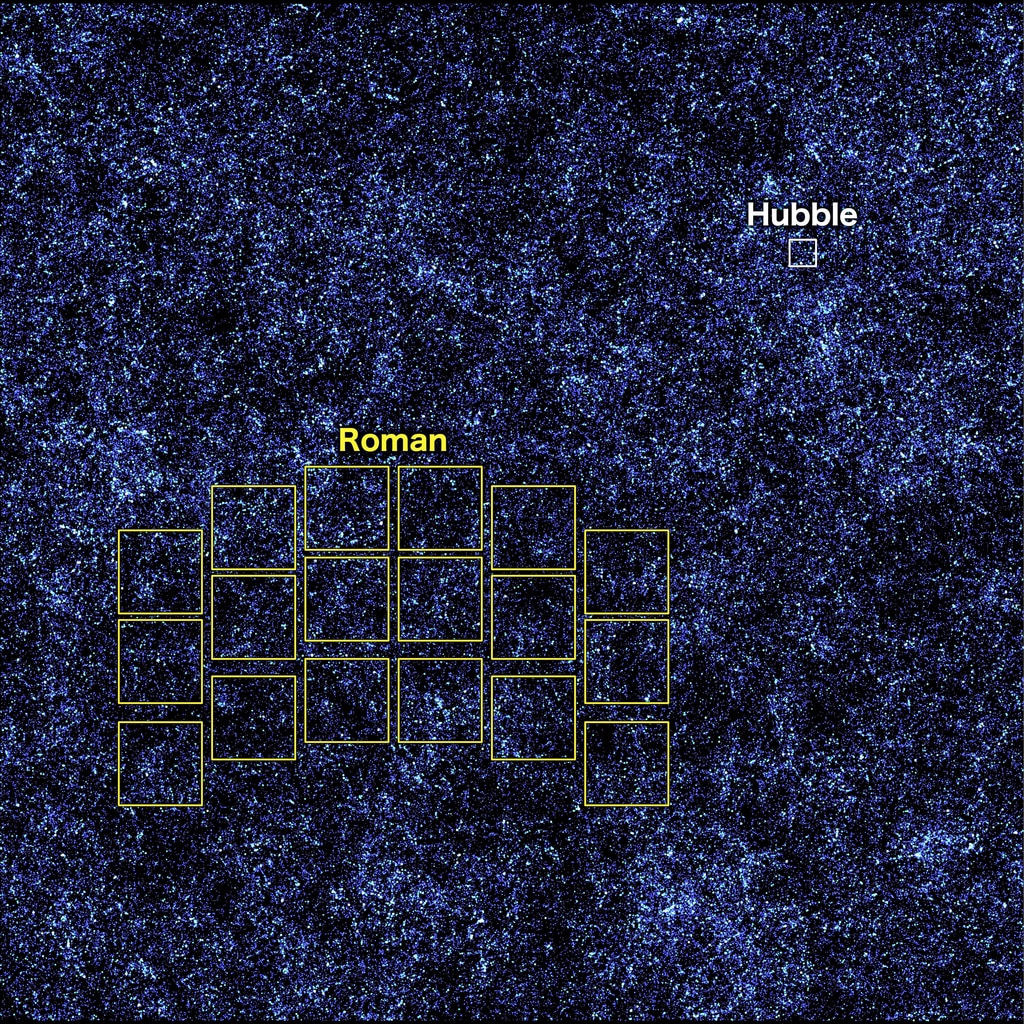
- The telescope will have a field of view at least 100 times larger than Hubble in infrared and could measure light from billions of galaxies.
- Its biggest science targets are dark energy, dark matter, galaxy evolution, and a new statistical census of exoplanets.
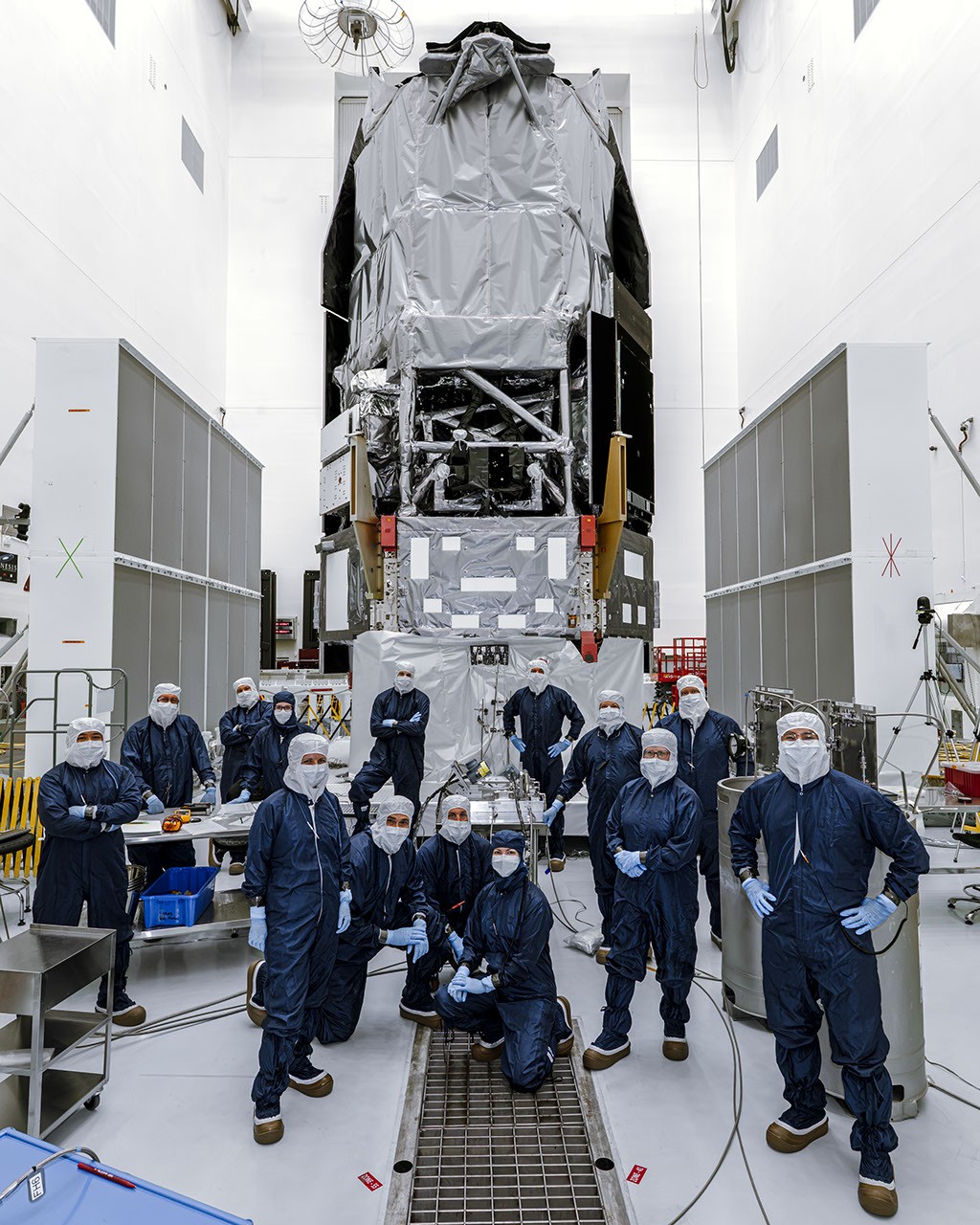
One week ago, the Nancy Grace Roman Space Telescope stopped feeling like a distant promise and started looking like launch cargo. NASA announced on August 10 that teams at Kennedy Space Center had begun integrated operations with SpaceX hardware after mating the observatory to its payload adapter and a fitting designed for large, heavy payloads.
The important detail is the schedule: Roman remains roughly nine months ahead of its original plan, and NASA is targeting launch no earlier than August 30, 2026, on a Falcon Heavy from historic Launch Complex 39A. Between now and that window, the dry but decisive steps remain: encapsulate the observatory inside the payload fairing, move it to the SpaceX hangar, and integrate it with the rocket.
Why this launch matters now
Roman is not just another space telescope with a better camera. The NASA mission page frames it as an observatory built for structural questions: why the expansion of the universe is accelerating, how dark matter organizes galaxies and clusters, and what kinds of planets exist in the cold, distant parts of stellar systems.
The central difference is scale. Roman uses a 2.4-meter primary mirror, like Hubble, but its wide-field instrument sees a much larger patch of sky. NASA summarizes the comparison sharply: Roman will have a field of view at least 100 times larger than Hubble in infrared and can survey the sky up to 1,000 times faster while keeping similar resolution.
A survey machine, not a single-photo telescope
The Wide Field Instrument is what changes the conversation. Instead of staring at one rare target at a time, Roman is designed to sweep enormous regions of sky and produce coherent maps. That will let astronomers measure the three-dimensional distribution of millions of galaxies, study distant supernovae, and watch how massive structures bend light from even more distant objects.
That technique, weak gravitational lensing, is one of the most elegant ways to map matter that does not emit light. If dark energy is a cosmic pressure that changes over time, or if general relativity needs adjustment on gigantic scales, Roman should help separate those possibilities with statistics, not only beautiful images.

Exoplanets by another route
Roman will also bring a different style of planet hunting. Its gravitational microlensing survey will monitor roughly 100 million stars for hundreds of days, watching for temporary brightening caused by rare alignments. NASA expects the method to discover about 2,500 planets, including rocky worlds and planets in wide orbits that transit missions struggle to catch.
Then there is the Coronagraph Instrument, a technology demonstration built to block starlight and directly reveal giant planets or dusty disks around nearby stars. It will not be the final exoplanet telescope, but it could become a practical bridge toward future missions that try to image more Earth-like worlds.

What to watch over the next few weeks
The August 30 window is "no earlier than", so technical or weather delays remain possible. This week milestone does not guarantee launch, but it changes the state of the mission: Roman has moved from construction and isolated testing into the phase where every physical connection to the rocket matters.
If all goes well, the value of Roman will arrive after the launch spectacle. The mission’s most radical promise is to make processed data public quickly, letting teams around the world explore the same deep map of the sky without waiting years for exclusive access. Webb gave us zoom; Roman wants to give us context. And for a universe that expands, accelerates, and hides most of its mass, context is exactly what is missing.
Comments (0)
No comments yet.