- The short version: Halliday G2 was announced on July 21, 2026 as camera-free AI glasses built around meetings and productivity.
- The hardware: binocular waveguide display, micro-LED projectors, up to 1,600 nits, 600 x 300 resolution per eye, four microphones, and a sub-50 g frame.
- The timeline: preorders start with a 10-dollar deposit, expected retail price is 599 dollars, and first shipments are planned for September 2026.
- The real question: can AI understand a meeting well enough to help, or will it become one more panel to manage?
A pair of glasses that does not record the room, but wants to read the meeting for you: that is the interesting angle behind Halliday G2. The company introduced its second-generation glasses on July 21, 2026, as the smart-glasses market splits between always-ready cameras, subtle displays, and voice assistants that promise to summarize the world in real time.
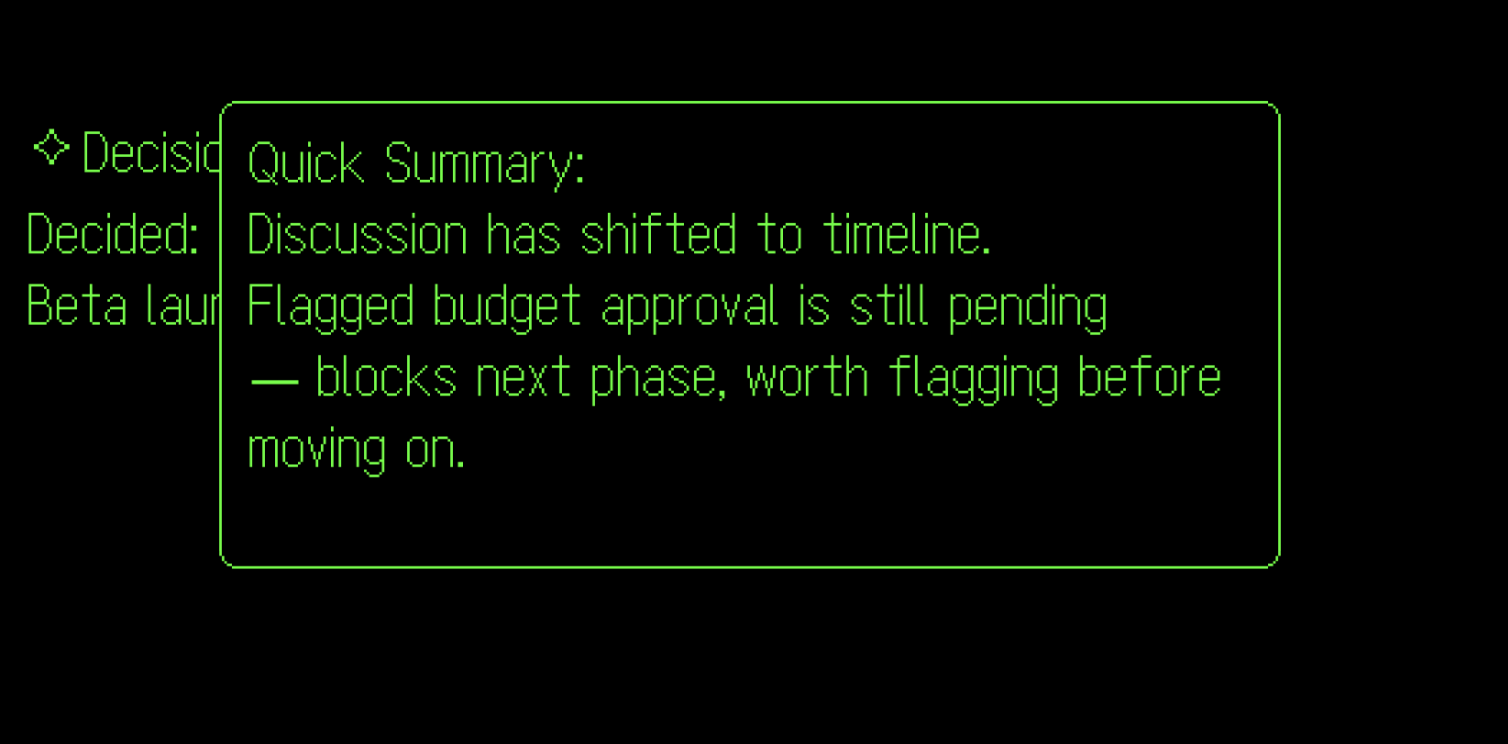
G2 tries a different entry point. Instead of selling video capture, it uses a green display in the upper field of view to show captions, translations, quick notes, and commitments made during a conversation. It is less cinematic than Ray-Ban Meta glasses, but potentially easier to accept in a workplace.

Why this matters now
The announcement lands at a moment when AI wearables need a reason to exist beyond demos. The first wave promised photos, memory capture, and quick answers; Halliday is suggesting something narrower: helping people who spend their day in calls, interviews, classes, briefings, or multilingual meetings.
According to company information and recent tech coverage, the Meeting Flow package includes captions, translation in more than 45 languages, contextual research, post-meeting summaries, transcripts, Thread Tracker, Decision Confirmation, and Commitment Check. In plain terms: the glasses try to show what was said, what remains unresolved, and who owns which task.
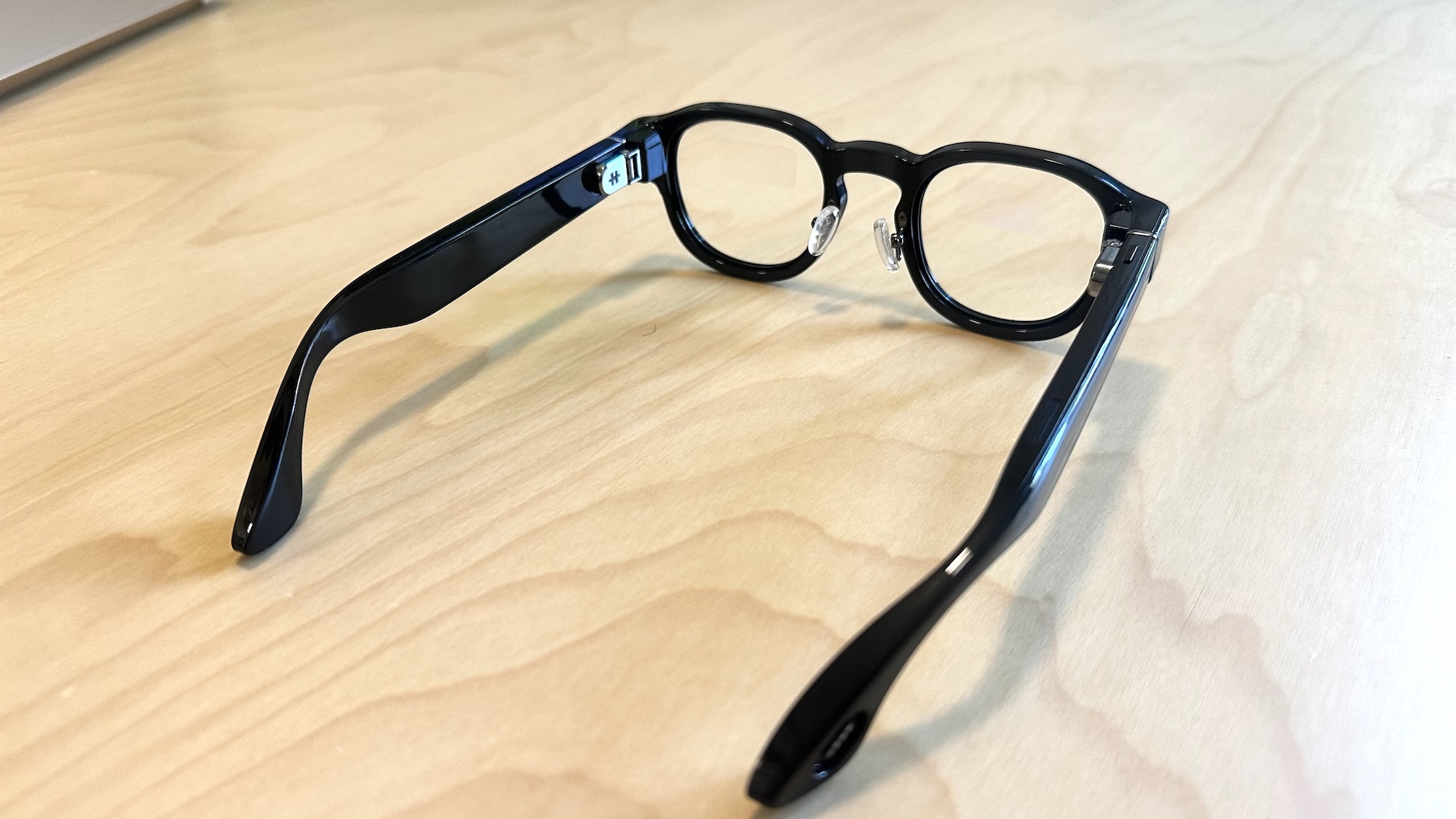
The hardware is discreet by design
The most important detail may be what is missing: there is no camera. That removes obvious features, but it also avoids one of the biggest social barriers for smart glasses. In offices, classrooms, and events, a device that does not capture images starts with less suspicion.
G2 uses a binocular waveguide system with micro-LED projectors, claimed 1,600-nit brightness, and 600 x 300 pixels per eye. The promise of more than 12 hours of typical use and a frame under 50 grams puts it in a wearable category that has to look normal before it can look futuristic.
The strength is also the risk
If Meeting Flow works well, G2 becomes an invisible teleprompter for professional life: preserving the thread of a discussion, translating a sentence, confirming a decision before everyone leaves the room. For distributed teams, freelancers, and people who switch between languages, that has obvious value.
But the promise depends on something difficult: understanding human context without inventing certainty. AI that assigns a task to the wrong person, summarizes an objection badly, or shows irrelevant information at the wrong moment may distract more than it helps. The Verge, after trying the glasses, described the second generation as much better than the first while remaining cautious about the practical value of the AI features.
What to watch before September
First shipments are expected in September 2026. Until then, the discussion should not stop at the 599-dollar price tag. Four points matter:
- whether the display remains readable in bright offices and commutes;
- whether transcripts and decisions stay reliable in messy conversations;
- how Halliday handles privacy, audio retention, and participant consent;
- whether removing the camera is enough to stand out in a crowded market.
Halliday G2 is interesting because it does not try to be everything. If it wants to replace the phone, it fails before it starts. If it can turn long meetings into short, checkable, private information, it may point to a more realistic future for AI glasses.
Comments (0)
No comments yet.