The question looked almost contained: when the James Webb Space Telescope found large, mature galaxies in the young universe, astronomers had to explain how they grew so quickly. Now a study published on August 18, 2026 in Nature Astronomy makes the problem more interesting, and perhaps harder. Some of those galaxies may not only be mature early; they may be more massive than we thought.
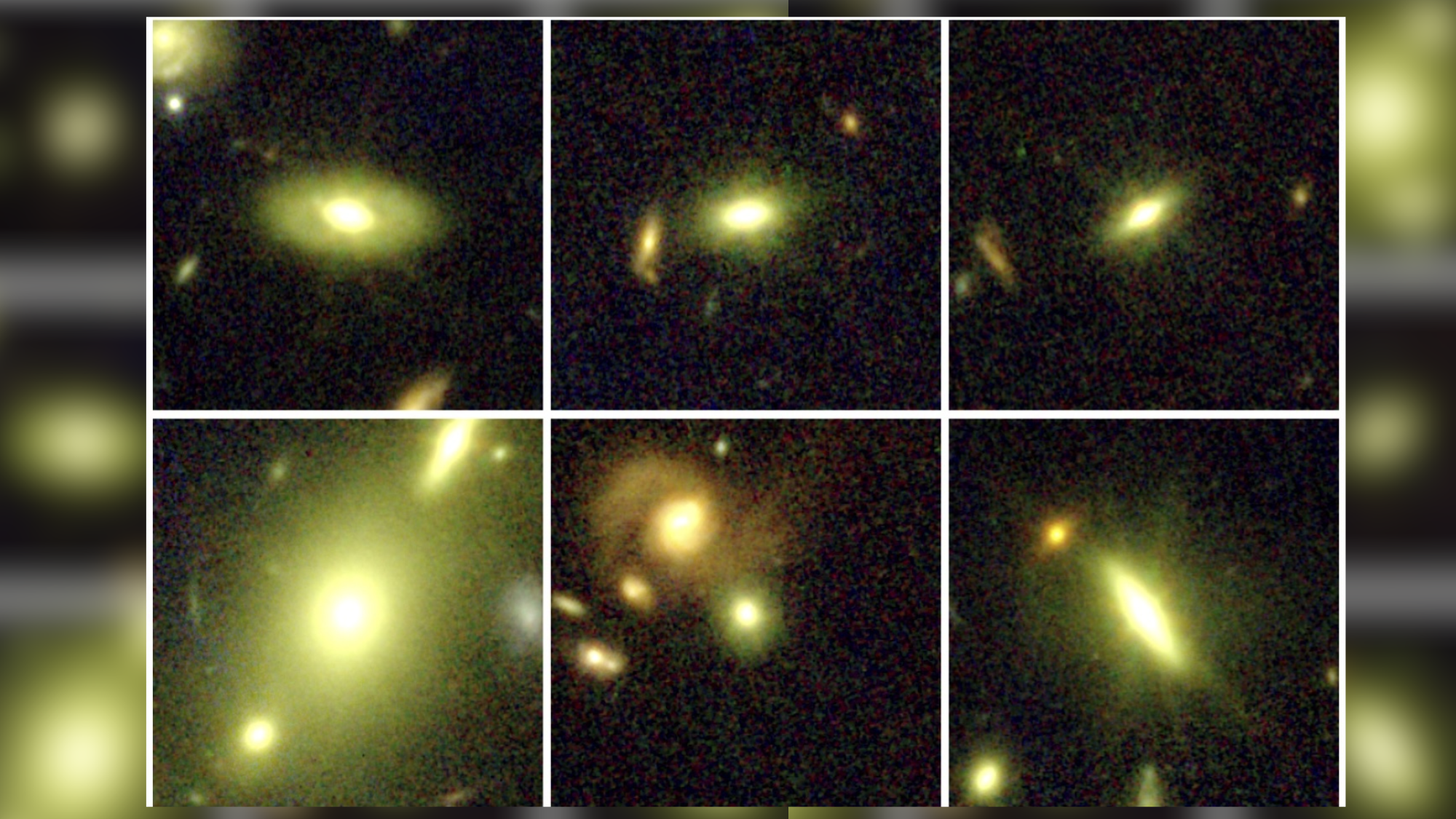
The team, led by researchers at Leiden University, analyzed nine ancient quiescent galaxies by combining ultra-deep JWST spectra with earlier data from the Very Large Telescope. The result, highlighted by Phys.org, Leiden University, and Space.com, points to an unexpectedly large population of small, faint stars that are difficult to see.
What people are saying
The dramatic reading is that Webb has "broken" cosmology again. It is tempting because it fits the story of the past few years: the telescope observes galaxies that seem too large, too early, and each new paper appears to increase the tension with galaxy-formation models. If a galaxy that already looked heavy may actually contain up to four times more stellar mass, the headline almost writes itself.
But that short version hides the important detail. The study does not say the Big Bang is wrong, and it does not collapse every mass measured by JWST. What it questions is a tool astronomers have used for decades: the initial mass function, or IMF, which describes the proportions in which small, medium, and massive stars are born. Many estimates assume that this mix resembles the Milky Way. The new analysis suggests that, in very massive ancient galaxies, the recipe may have been different.
What the data says
The key is light split into a spectrum. Large, bright stars dominate the appearance of a distant galaxy, like skyscrapers seen from far away in a city. Small stars are the houses between the towers: individually easy to miss, but capable of adding up to much of the mass. Chloe Cheng, the paper's first author, uses exactly that comparison in Leiden's release: the models reveal many "houses" hidden between the "skyscrapers".
According to the scientific abstract, the team studied quiescent galaxies around redshift 0.7 through the JWST-IMFERNO program and extended the reading with spectra from the VLT LEGA-C survey. By measuring features sensitive to low-mass stars, the researchers found more bottom-heavy IMFs in the most massive galaxies. In plain language: there are more small stars than a Milky Way-based extrapolation would predict.
The strongest case is also the most provocative. One galaxy in the sample formed most of its stars less than 1.5 billion years after the Big Bang and may be about four times more massive than previous estimates suggested. That does not erase current models at once; it increases the pressure on them. If descendants of the "impossibly early" galaxies hide this much mass in small stars, their ancestors may also have been heavier.

The cautious reality
The healthy thing about this discovery is that it does not live on a pretty picture. It lives on spectra, stellar-population models, and an uncomfortable question: when we look at an ancient galaxy, are we counting light or are we counting mass? The two are not identical when many stars are small, cool, and discreet.
The consequence may reach beyond galaxy formation. Small stars live for a very long time and often host planets. Mariska Kriek, who led the research, notes that more mass hidden in those stars may also imply more planets formed early than previously assumed. That remains speculative, but it changes the imagination: the young universe may not only have been denser in massive galaxies; it may also have contained more small, persistent environments than we thought.
For now, the fairest reading is this: Webb has not ended cosmology, but it has taken one comfortable assumption off autopilot. If the mix of stars varies with mass and formation epoch, many calculations about the ancient universe will need to become more careful. And that is science at its best: not a final answer, but a new ruler for measuring what once looked invisible.
Sam Okonkwo Aug 25, 2026 10:43 AM
espera isto e o que a malta falava ne haha
Chris Nguyen Aug 25, 2026 4:03 PM
been waiting for someone to cover this properly haha?
Chris Nguyen Aug 25, 2026 4:59 PM
ok but does this actually changee anything for small guilds tho idk