We often picture black holes as final stops: everything falls in, everything vanishes, and the story ends there. The image brought back by the James Webb Space Telescope in July 2026 is stranger and more useful. At the center of NGC 4696, the dominant galaxy in the Centaurus Cluster, the supermassive black hole appears to sit inside a cycle that heats, cools, and returns fuel to the cosmic engine itself.
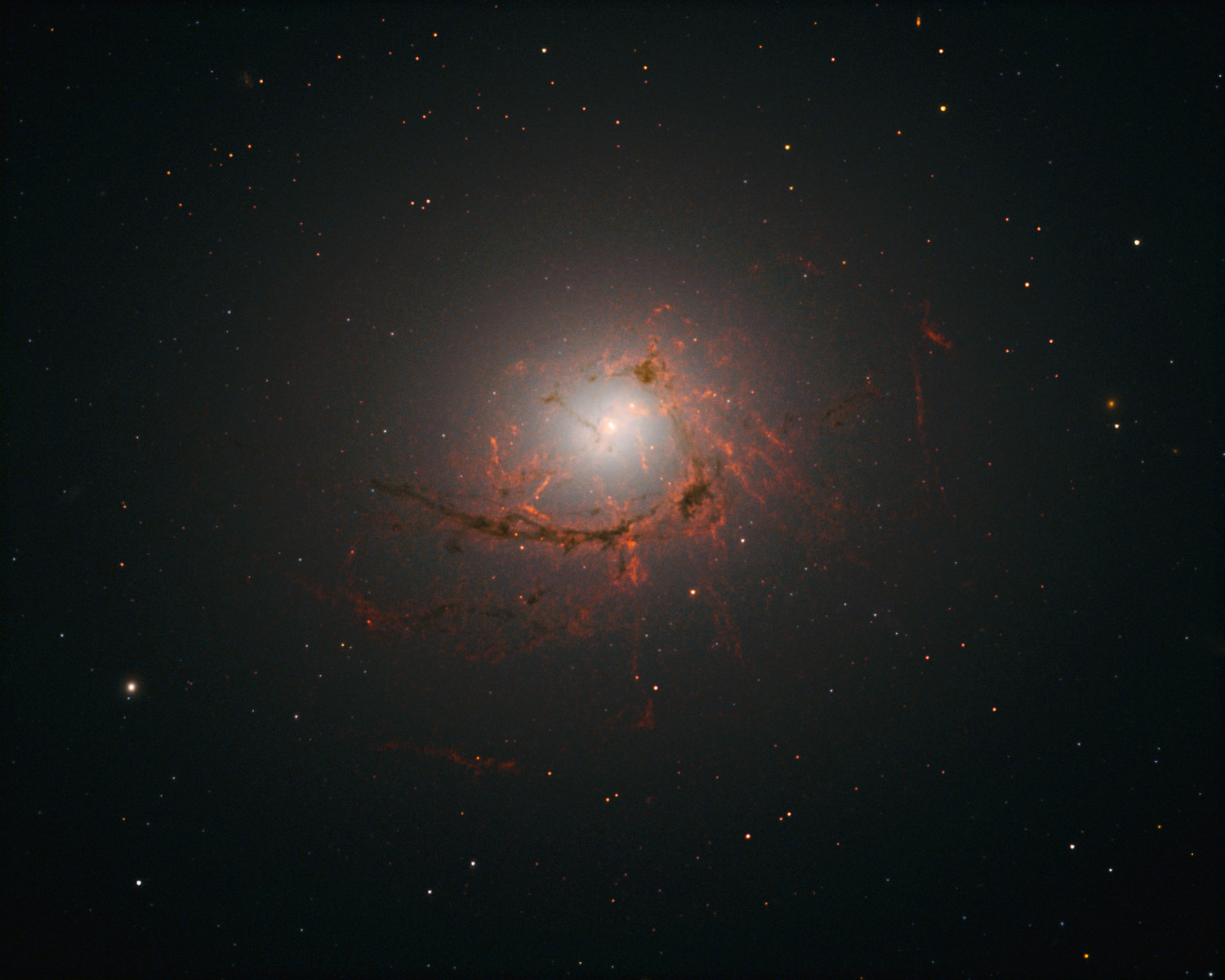
The mystery was not hunger, it was supply
Nearly every large galaxy has a supermassive black hole at its center. When enough gas is available, that object becomes an active nucleus: it pulls in material, releases energy, and launches jets powerful enough to shape the evolution of an entire galaxy. The catch is that those same jets also heat the surrounding gas. In principle, that should interrupt the supply. If the fuel becomes hot and diffuse, how does matter keep falling toward the center?
The answer astronomers had been testing was a kind of cosmic recycling. The black hole injects energy into its environment, the gas eventually cools, condenses into long narrow filaments, loses angular momentum along the way, and returns to the center. What was missing was a sufficiently detailed view of the physical connection between those galaxy-scale filaments and the inner disk that actually feeds the black hole.
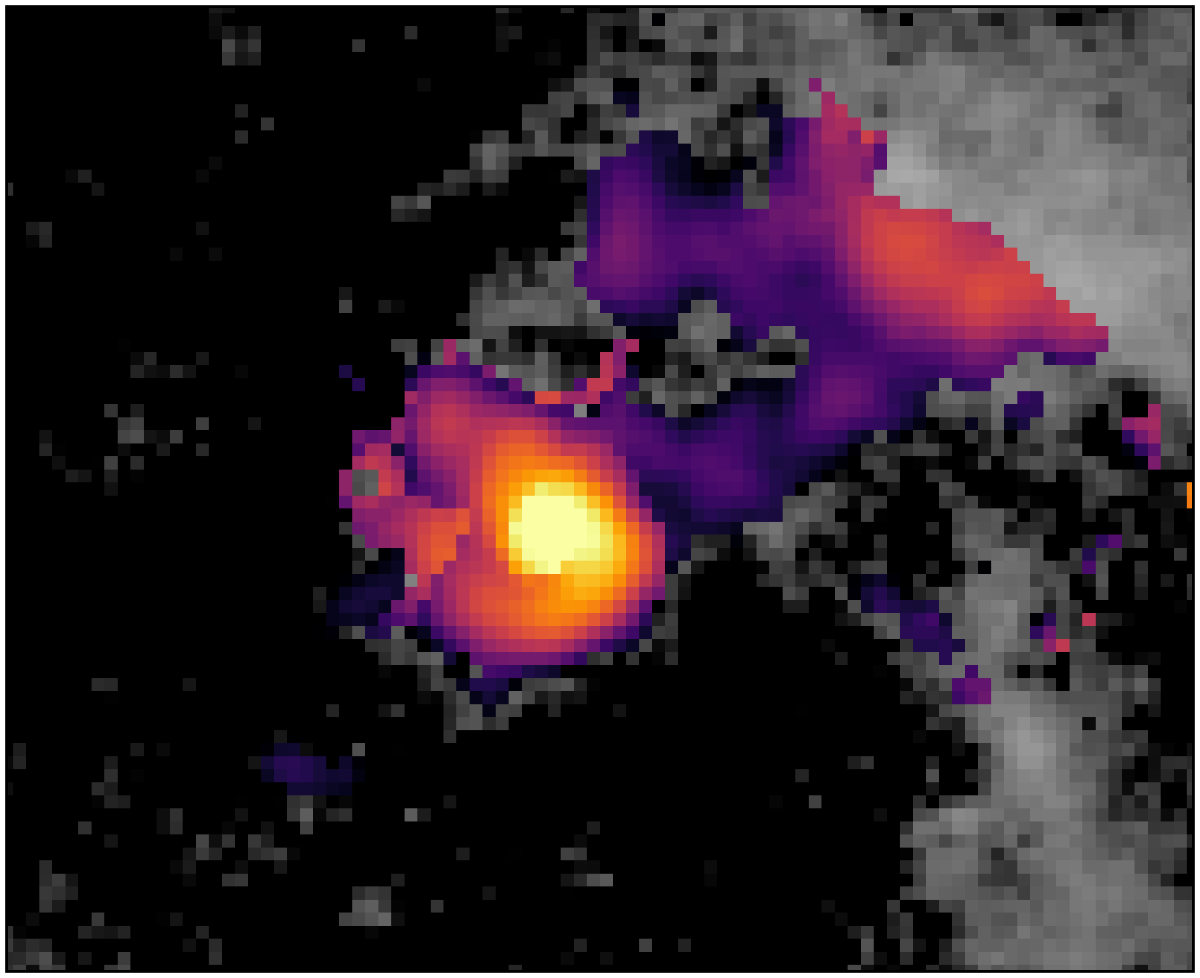
Webb followed the gas into the disk
The team led by Julie Hlavacek-Larrondo pointed JWST at NGC 4696 for nearly eight hours using the NIRSpec instrument. The target is about 145 million light-years away, close enough for the telescope to separate structures only a few dozen light-years across in the heart of the galaxy. What once looked like an S-shaped swirl in Hubble images turned out to be a circumnuclear gas disk about 800 light-years wide, rotating at speeds up to 600 kilometers per second.
The decisive detail is that this disk does not appear alone. Velocity and emission maps show a direct connection to a larger filament, as if cool gas from the galaxy atmosphere were draining down a narrow road into the final reservoir before the plunge. The study, published in The Astrophysical Journal Letters in mid-July 2026, describes this connection as a missing link between large-scale cooling flows and accretion within a few hundred parsecs of the black hole.

Why it matters now
There is a reason this news is more than a beautiful infrared image. How supermassive black holes grow quickly, especially in the young universe, remains one of the difficult questions in modern astronomy. NGC 4696 is a comparatively nearby version of that laboratory: we do not only see a black hole eating, we see the plumbing that makes the meal possible while regulating star formation around it.
It also reminds us that Webb is not only finding new objects. It is turning old questions into measurable maps: where the gas is, where it is moving, how fast it rotates, and how it connects to larger structures. In this case, the answer is almost circular. The black hole heats the gas, the gas cools, filaments return matter to the center, the disk feeds the black hole, and the cycle begins again. For an object famous for letting nothing escape, that is a surprisingly efficient way to keep a conversation going with an entire galaxy.
Comments (0)
No comments yet.