Toronto and Richmond Hill became, this week, a small laboratory for a much bigger question: are AI glasses ready to move beyond demos and into everyday life?
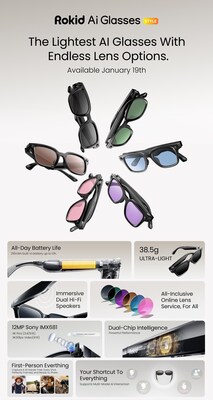
Rokid announced on July 29, 2026 that Rokid Glasses are coming to Canada, supported by a partnership with Ming's Optical for prescription lenses. What makes the news interesting is not just price or design; it is the mix of Micro LED display, 12 MP camera, ChatGPT, Gemini, and real-time translation in a frame that tries to look like normal eyewear.
Timeline
- Early 2026: Rokid expands its AI eyewear line with daily-use models, including a display-free version and a version that projects glanceable information into the lens.
- July 29, 2026: the company announces its official North American market entry through Canada.
- July-August 2026: launch pricing lowers the Canadian price of Rokid Glasses to CA$899 and Rokid Ai Glasses Style to CA$499.
- September 1, 2026: regular availability is scheduled in Canada, with CA$999 pricing for the display model and CA$549 for the Style version.
That timeline points to a different strategy from the classic headset race. Rokid is not selling a virtual reality visor for home use; it is testing whether lightweight glasses with prescription support and a multimodal assistant can fit into the routines of people who work, travel, study, or attend events.
What changes in the hardware
According to Rokid's product page, Rokid Glasses weigh about 49 grams, use Snapdragon AR1 Gen 1, and include Wi-Fi 6, Bluetooth 5.3, onboard storage, and a 12 MP Sony IMX681 camera. The display is a dual-eye monochrome Micro LED system with advertised brightness up to 1500 nits, designed for short-form information: captions, navigation, prompts, translation, and notifications.
That choice matters. Instead of trying to replace the phone screen, these glasses aim to reduce micro-interruptions: glance at a direction, read a caption, save a photo, ask for context about an object, or translate a conversation without pulling a phone out of your pocket.
Why Canada is a smart test market
The company's announcement highlights Canada's linguistic diversity. That explanation fits a product whose most direct pitch is real-time translation: if the promise does not work in multilingual cities, it will struggle to convince the rest of the world.
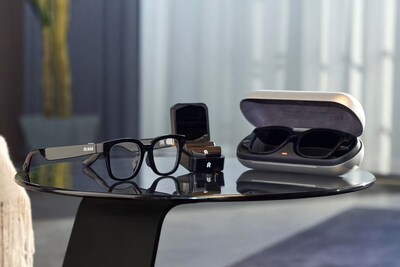
The Ming's Optical partnership is more than distribution. The hard problem for smart glasses is not only battery life or software; many people need prescription lenses, long-wear comfort, and a socially acceptable object on their face. A wearable fails quickly if it looks great in a keynote but feels awkward after two hours.
The open AI angle
Another detail to watch is assistant strategy. Rokid promotes compatibility with ChatGPT and Gemini, alongside an agent store for specialized features. That makes the glasses feel closer to a small platform than a Bluetooth accessory with a camera.
For developers, creators, and technical communities, the signal is clear: the next wave of wearables may depend as much on small software flows as on sensors. Translation, captions, meeting notes, navigation helpers, and accessibility tools could become niche experiences that live directly on the wearer's face.
What still needs proving
Price, privacy, real-world battery life, and social etiquette remain the difficult questions. A camera on the face needs clear indicators, simple controls, and understandable usage norms. An assistant that sees and hears the environment also needs transparent limits around data, permissions, and recording.
Rokid's Canadian entry does not solve those questions, but it moves them into a real market, with optical partners, set prices, and an availability date. That is why this launch matters now: it is not just another trade-show concept; it is another step in the attempt to turn wearable AI into a mass-market product.
Sources: GlobeNewswire/Rokid announcement from July 29, 2026, MobileSyrup, WiFiHiFi, and the official Rokid Glasses product page.
Comments (0)
No comments yet.