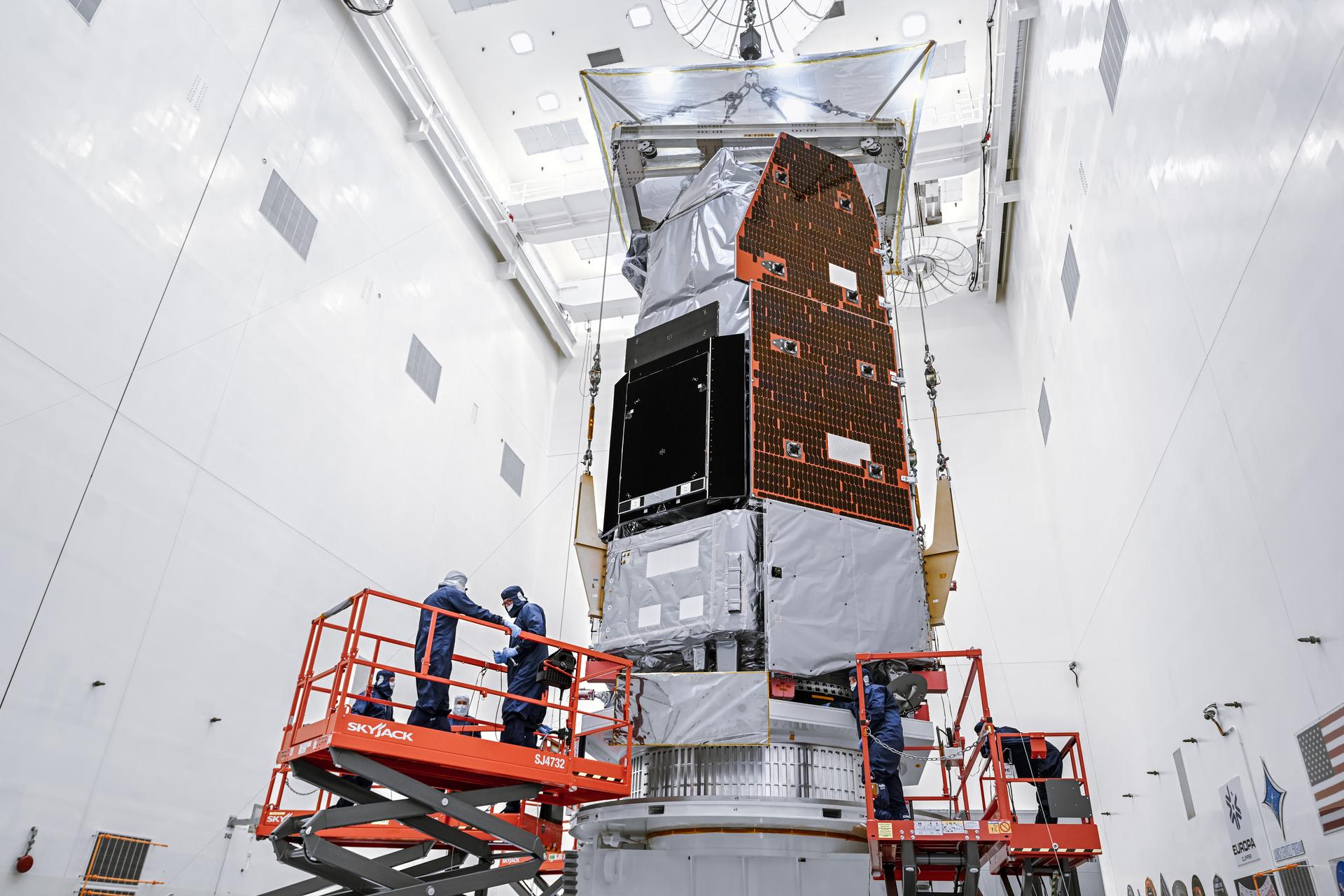
Some space missions arrive like fireworks, with a single image designed to travel around the world. The Nancy Grace Roman Space Telescope appears to be preparing something else: a map factory. NASA opened the mission media preview in late July, installed a memory card carrying 1,350,144 names on July 27, and is still targeting an August 30, 2026 launch on a Falcon Heavy from Kennedy Space Center.
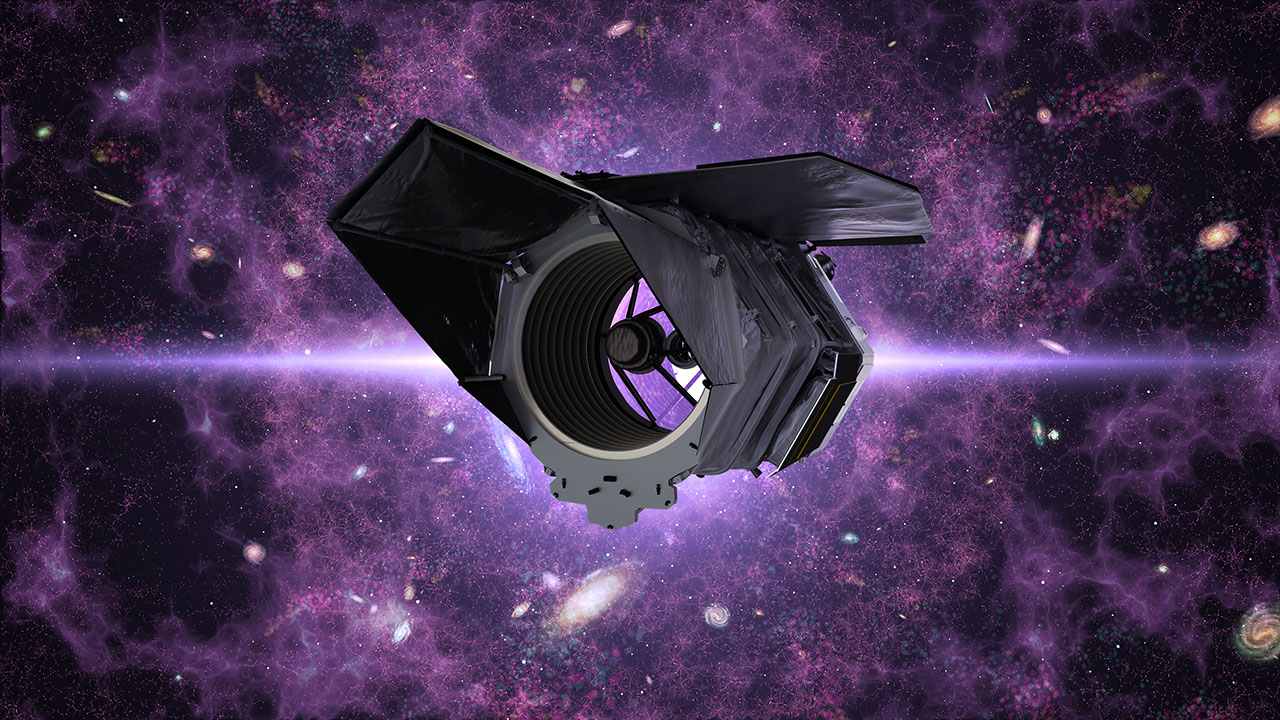
What makes Roman interesting is not simply that it is another space telescope. The promise is to combine Hubble-like sharpness with a field of view at least 100 times larger. Instead of staring at a tiny patch of sky for a long time, Roman is designed to sweep large regions with enough quality to turn cosmic statistics into concrete images.
A camera built to trade portraits for maps
Roman will operate in infrared light and carry two main instruments. The first, the Wide Field Instrument, is the reason the mission is often compared to a cosmic wide-angle camera: each image can cover an area larger than the apparent full Moon while keeping fine resolution. Across its five-year primary mission, NASA expects to collect about 20 petabytes of data.
That scale changes the scientific question. Hubble and Webb are extraordinary at going deep on specific targets; Roman was designed to find patterns across enormous populations. NASA mission materials describe measuring light from up to a billion galaxies, mapping how matter is distributed across the universe, and watching enough stars to discover planets through gravitational microlensing.
Microlensing is an elegant technique: when one star passes in alignment with another, gravity acts as a lens and amplifies the light. If there is a planet in the system, it leaves a small signature in that amplification. Roman should observe the center of the Milky Way with enough cadence and sky coverage to find thousands of these events, including worlds that would be hard to catch through transits or direct imaging.
The test that could shape the next planet hunt
The second important piece is the Coronagraph Instrument. Its goal is not to do the full job of a future mission dedicated to Earth-like planets, but to test space technology capable of blocking a star's glare while letting through the much fainter light from nearby planets and dusty disks. It is a demonstration, but one with consequences.
If the coronagraph performs as planned, it will reduce uncertainty for future telescopes that aim to study the atmospheres of small, cool worlds. Exoplanet astronomy has advanced through indirect methods such as transits and radial velocity; direct imaging remains difficult because the star dominates the signal. Roman will not solve that problem completely, but it can show how far current engineering can push contrast.
The timing matters as well. The mission comes after years in which Webb changed the conversation about ancient galaxies and exoplanet atmospheres. Roman enters with a different role: less isolated spectacle, more systematic survey. For dark energy, dark matter, cosmic structure, and planetary census work, the quantity and uniformity of data are part of the discovery.
Why this launch deserves attention now
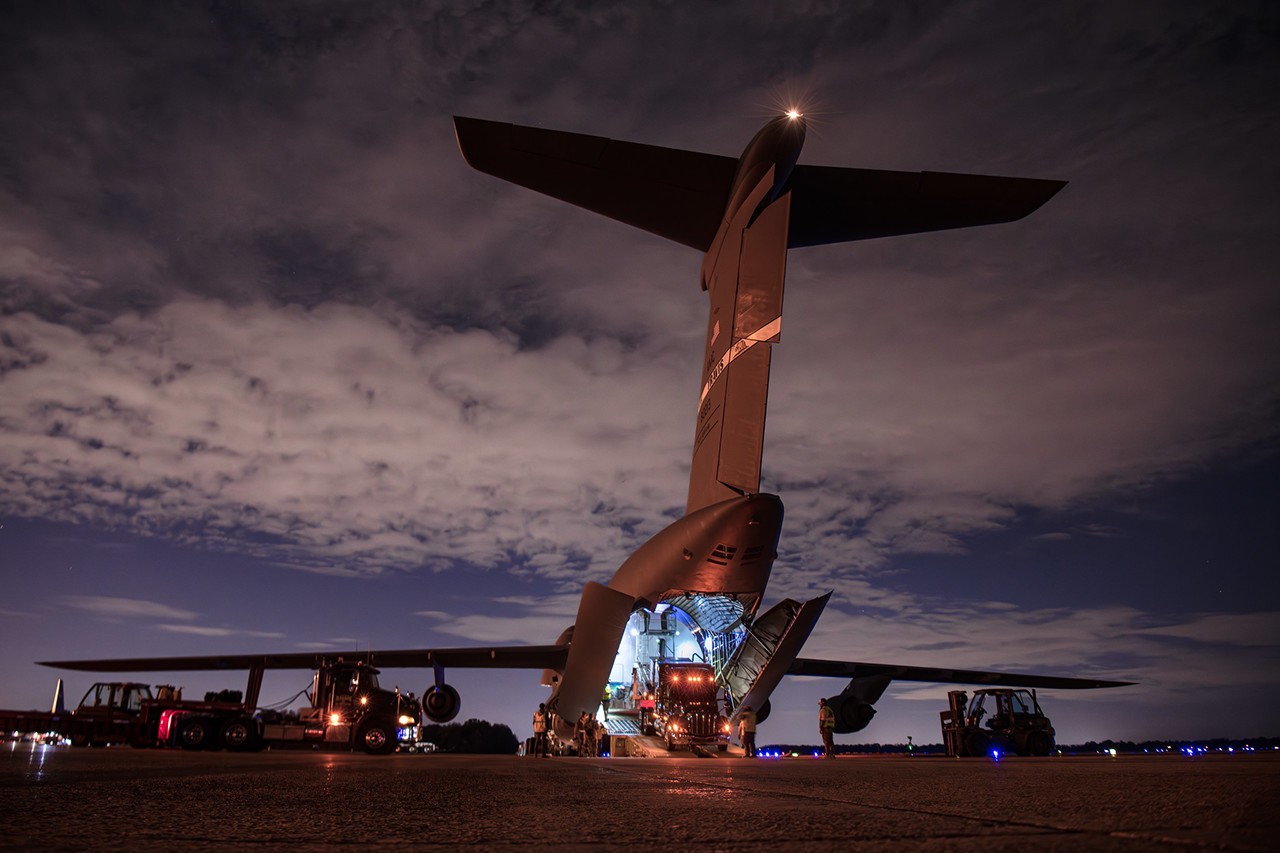
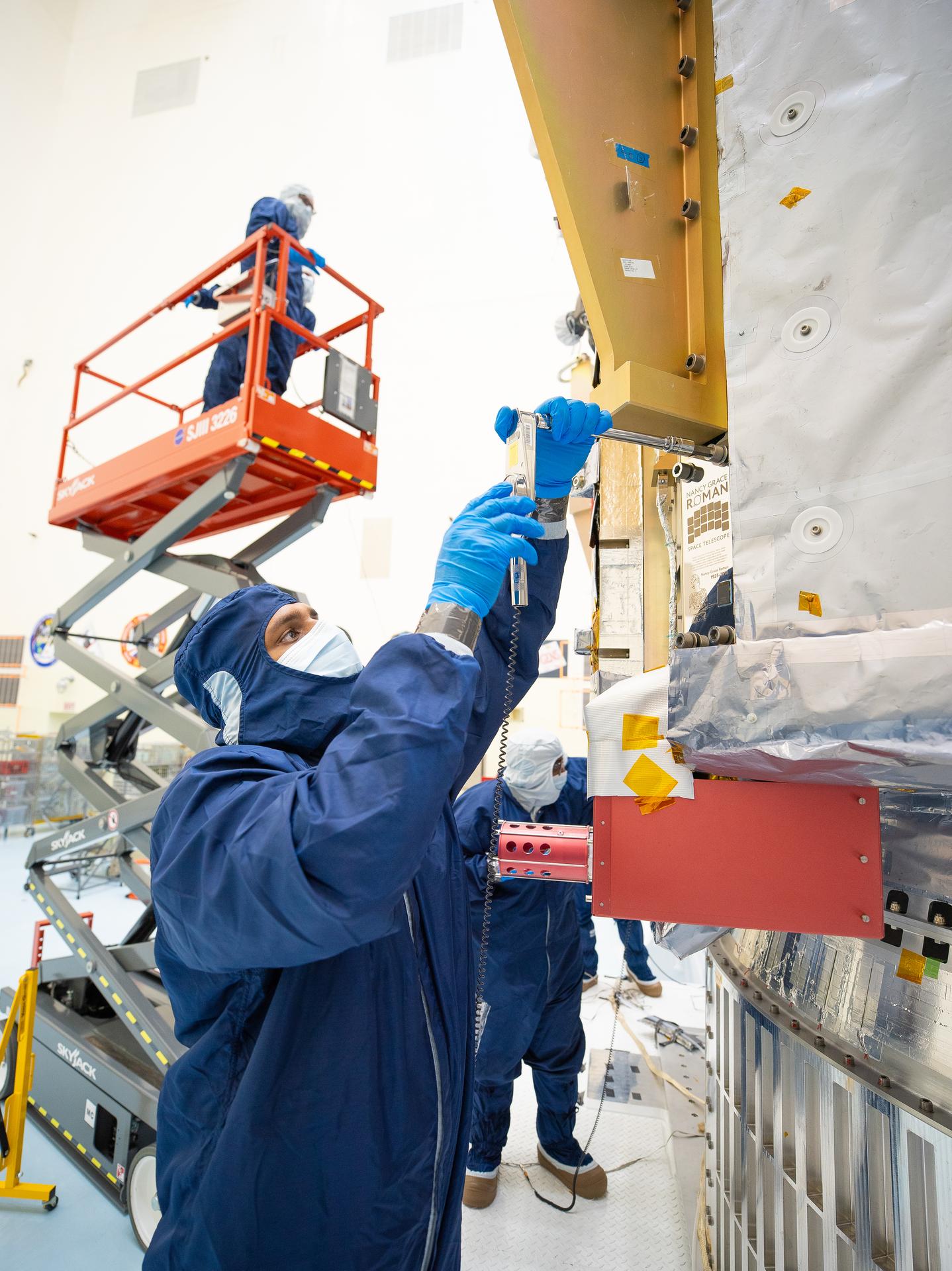
The late-July update makes the mission concrete: a public briefing, preparation at Kennedy Space Center, and even the symbolic gesture of a card with more than 1.35 million names heading to L2. From here, the story stops being only a future telescope and becomes scientific infrastructure ready to leave Earth.
There are risks, as with any launch and commissioning of a space observatory. Expectations also need patience: the first scientific results require calibration, validation, and analysis time. But Roman stands out because it does not depend on one heroic image to justify the mission. Its value will be in disciplined repetition: scan, compare, measure, and measure again.
If all goes well, the next decade of astronomy will have three complementary styles in orbit or working together: Hubble as the optical and ultraviolet legacy, Webb as a deep infrared magnifier, and Roman as a panoramic survey engine. It is less a replacement than a change of scale. The universe does not just become sharper; it becomes more searchable.
Comments (0)
No comments yet.