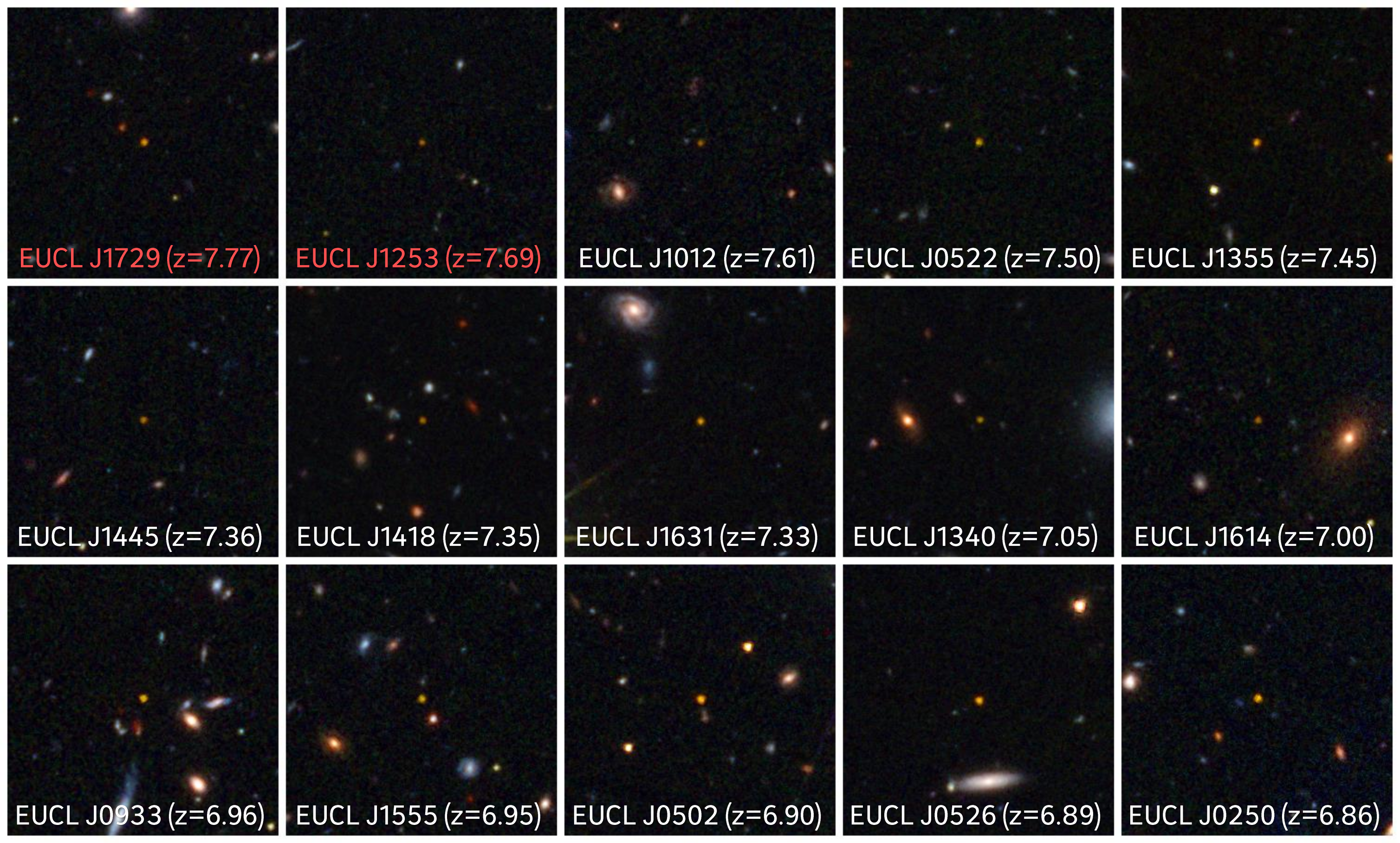
Some discoveries look tiny on a screen: red dots at the centre of image tiles, almost lost among billions of surveyed objects. On 6 July 2026, ESA and the Euclid Consortium announced that those dots tell a huge story. The Euclid space telescope has discovered 31 very ancient quasars, including the two most distant ever observed.
The record-holder, EUCL J172902.75+641018.1, sits at an approximate redshift of 7.77. In human terms, we see its light as it was when the Universe was about 670 million years old, only 5% of its current age. For a mission built to map dark matter and dark energy, it is a useful reminder: when you observe a vast part of the sky with high precision, unexpected cosmic fossils also appear.
A timeline from launch to the early Universe
- 1 July 2023: Euclid launches toward the L2 Lagrange point, about 1.5 million kilometres from Earth.
- 14 February 2024: routine science operations begin, with the VIS and NISP instruments collecting visible images and near-infrared data.
- 2025: early survey data help test how well the mission can separate galaxies, stars and extremely rare object candidates.
- 6 July 2026: the team publishes in Astronomy & Astrophysics the discovery of 31 quasars between redshifts 6.6 and 7.8.
- Late 2026: Euclid is expected to deliver its next major data release, expanding the search for even more distant objects.
That sequence matters because the result did not come from a single spectacular picture. It came from a chain: a broad space survey, selection algorithms, confirmation with ground-based telescopes such as Keck, Magellan and the Large Binocular Telescope, and scientific analysis to measure distances, environments and possible host galaxies.
Why do ancient quasars matter?
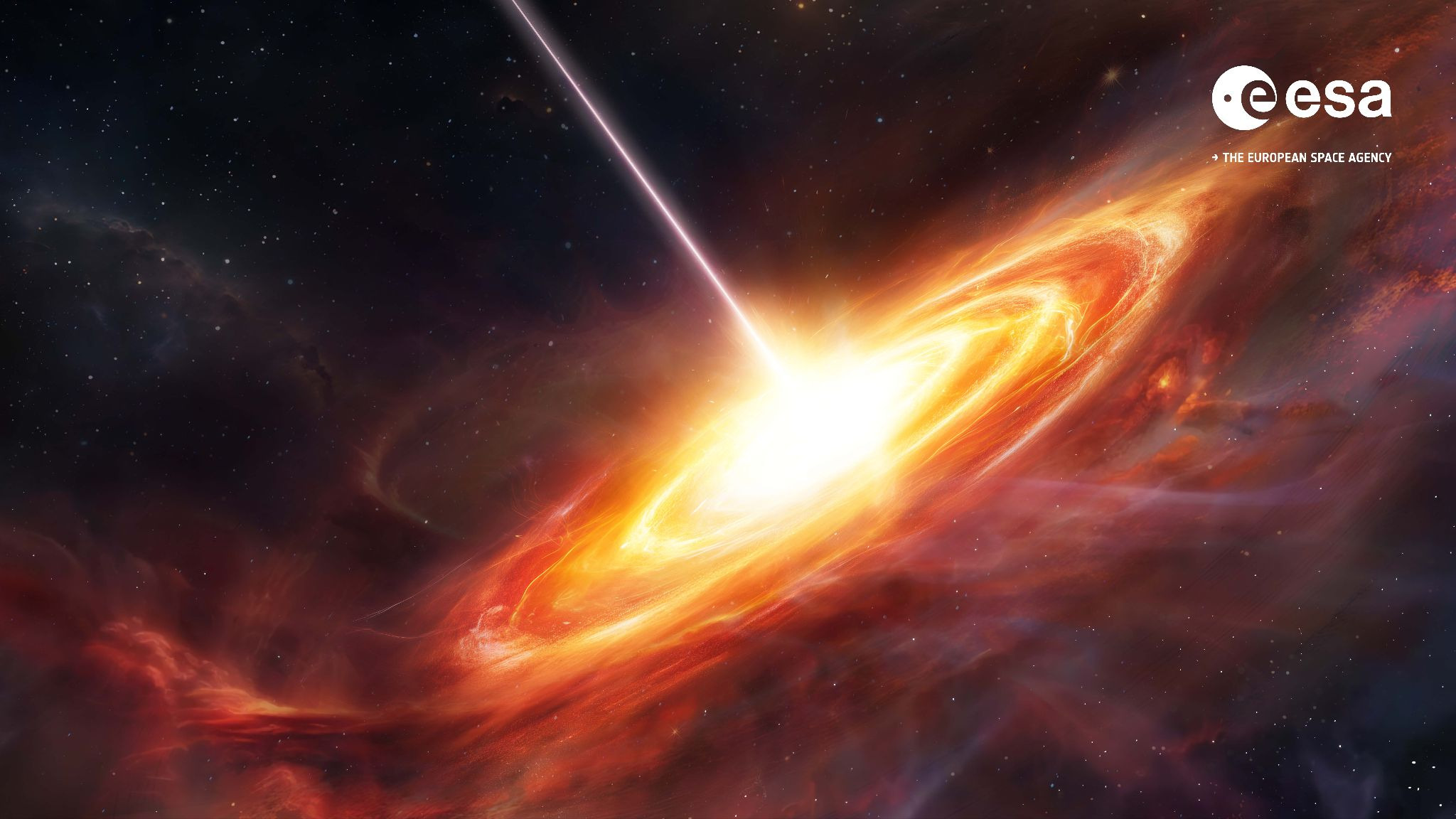
Quasars are galactic cores powered by supermassive black holes. As gas and dust fall toward those monsters, the material heats up and releases enough energy to outshine the host galaxy. In the local Universe that is already extreme; in the young Universe it becomes a fascinating problem.
How did black holes with millions or billions of solar masses grow so quickly? What role did they play during the epoch of reionisation, when light from the first stars and galaxies began transforming the neutral hydrogen that filled the cosmos? Until now, researchers had only a small number of examples. Euclid has more than doubled the known population of quasars beyond redshift 7, turning a list of rarities into the beginning of a statistical sample.
The detail that changes the scale
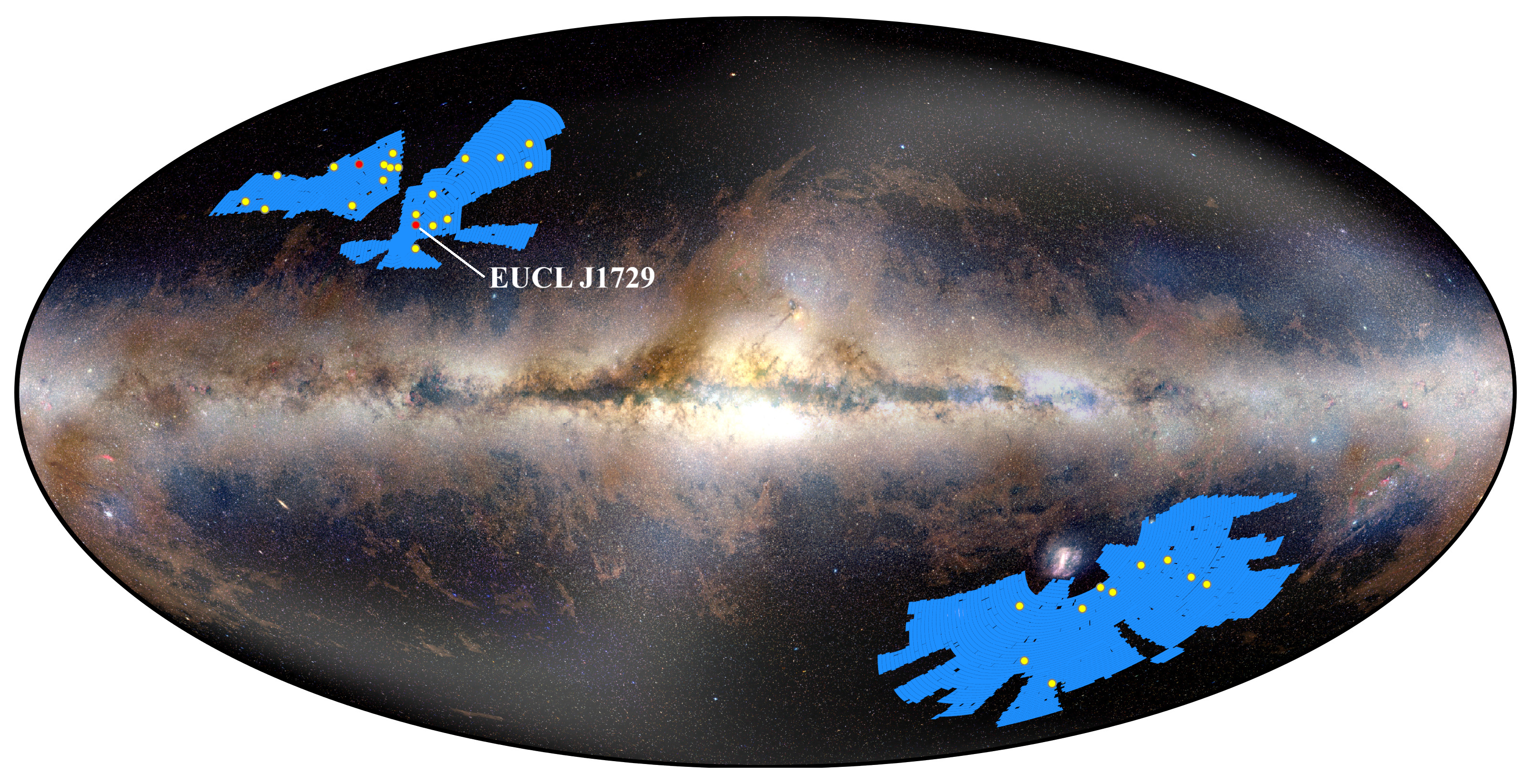
The decisive point is not only finding the most distant object. It is finding 31. According to the Euclid Consortium, only a tiny fraction of the nearly one billion objects already observed by the mission match this kind of ancient quasar. The challenge is to distinguish extremely faint points, reddened by cosmic expansion, from closer stars and galaxies.
Euclid combines area and depth. The mission covers a huge slice of sky and also observes in the near-infrared, exactly where the stretched light from ancient quasars becomes detectable. The result is a kind of cosmic fishing net: it does not catch only the brightest outliers, but starts revealing the normal population that used to remain hidden.
What comes next
The July discovery does not close the chapter; it opens it. Euclid has searched only part of its planned survey, and the mission is expected to keep mapping more than one third of the sky over six years. The scientific expectation is clear: find hundreds of high-redshift quasars and perhaps push the frontier beyond z greater than 8.
If that happens, we will get a sharper timeline of cosmic infancy: when the first giant black holes formed, how their galaxies produced stars and how light from those sources helped the Universe emerge from the so-called dark ages. For now, those small points in the Euclid mosaic are an elegant warning: sometimes an almost quiet image is the doorway to one of the most violent and formative eras in cosmic history.
Sources: ESA, Euclid Consortium, papers by D. Yang et al. and Silvia Belladitta et al. in Astronomy & Astrophysics.
Comments (0)
No comments yet.